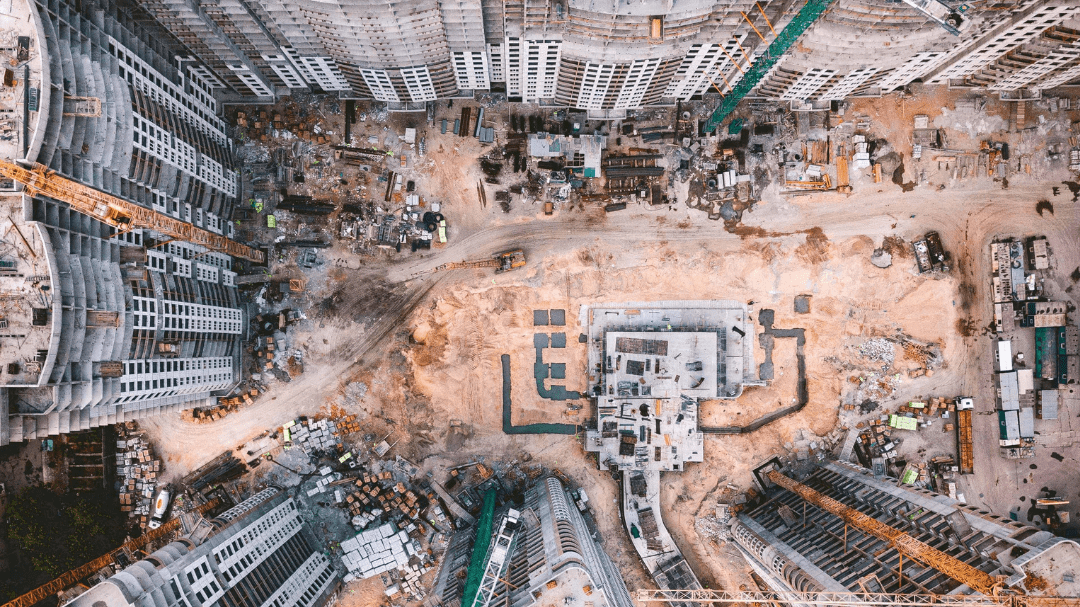
The Internet of Things is now establishing itself as one of the most decisive technological levers for modernizing construction site management. In a sector where work environments are vast, changing, and heterogeneous, the ability to capture, report, and analyze data from the field is becoming essential for ensuring team safety, optimizing equipment availability, and maintaining operational continuity. According to a 2024 report by Markets & Markets, IoT applied to the construction sector is experiencing annual growth of over 14%, driven by the increase in the number of connected machines and the gradual digitization of construction sites. This development responds to concrete challenges: frequent equipment losses, recurring theft estimated at tens of millions of euros per year in France according to the FFB, unexpected downtime, and accidents due to a lack of coordination between machinery and pedestrians.
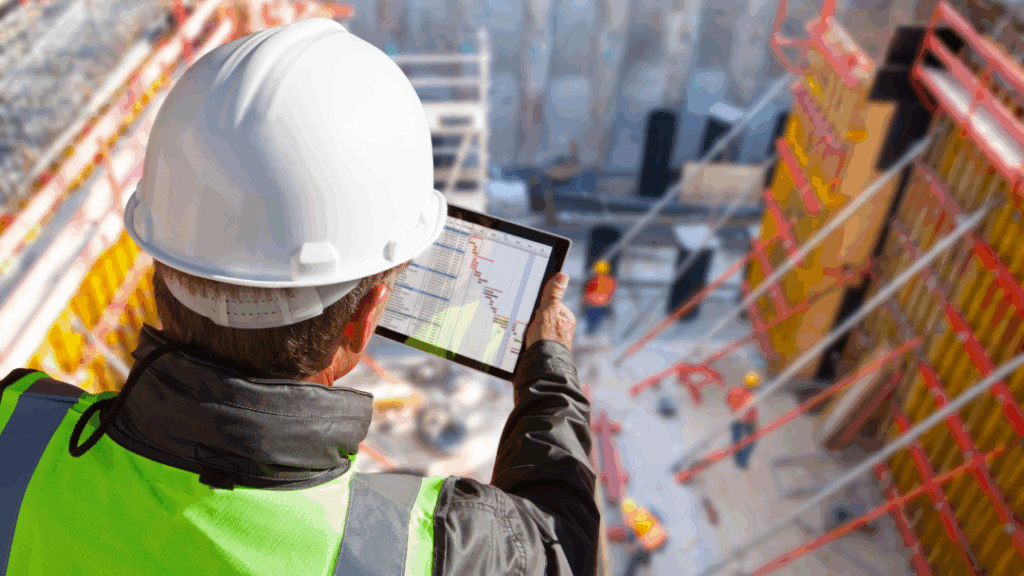
The location of equipment and personnel
La gestion quotidienne d’un chantier implique une connaissance fine de l’emplacement des engins, des outils et des travailleurs. Or, dans les faits, cette visibilité fait défaut à de nombreuses entreprises du BTP. Les retards induits par la recherche de matériel représentent en moyenne entre trente minutes et une heure par opérateur et par jour selon une étude de McKinsey publiée en 2023. L’IoT permet d’éliminer une grande partie de ces inefficacités grâce à l’intégration de technologies de localisation adaptées à chaque type d’actif.
Les capteurs BLE conviennent particulièrement au petit matériel et aux outils dispersés sur le chantier, tandis que les boîtiers GPS industriels assurent un suivi permanent des engins lourds ou des équipements déplacés entre plusieurs sites.
En connectant tous ces éléments à une plateforme IoT comme Charlie Gestion, il devient possible de visualiser en temps réel l’ensemble du parc matériel, d’identifier immédiatement une immobilisation inhabituelle, de vérifier la présence d’une équipe en zone de travail et d’anticiper les besoins de redistribution du matériel. Cette géolocalisation continue réduit non seulement les pertes et les oublis, mais améliore aussi la coordination opérationnelle entre les différents corps de métier présents sur le terrain.
Preventing accidents on construction sites
Construction sites remain, even today, one of the professional environments where theft of machinery and equipment is most frequent. The French Building Federation recently estimated that nearly €150 million worth of equipment disappears each year. The IoT provides a direct means of reducing these losses through continuous monitoring of machines, reinforced by instant alerts as soon as unauthorized movement is detected. Industrial GPS devices used in construction now make it possible to track a location every few minutes, even in areas with poor coverage, thanks to low-bandwidth networks such as LTE-M or NB-IoT. When combined with geofencing, site managers can be notified as soon as a machine leaves a defined area, significantly increasing the chances of recovery.
Safety is not just about preventing theft. Many accidents are linked to the use of equipment that is in poor condition or has not been properly maintained. The IoT allows continuous operating data to be integrated into sensors, which can be used to detect anomalies before they turn into incidents. According to data compiled by Deloitte in their 2024 report on predictive maintenance, these systems can reduce critical breakdowns and unexpected downtime by 20% to 30%. On a construction site, where every hour of machine downtime can be costly and disrupt operations, this ability to anticipate problems is a decisive advantage.
Accident prevention: a concrete response to risks in the field
Interactions between machinery and pedestrians are one of the leading causes of serious accidents on construction sites. IoT systems make it possible to better control critical areas and warn operators before a dangerous situation arises. When an excavator operator maneuvers near an underground network or a ground operator, sensors can trigger an immediate alert if they get too close. These technologies directly contribute to reducing collisions and incidents on construction sites. The INRS also points out that nearly one in five fatal accidents in the construction industry involves a moving machine, which fully justifies the integration of IoT solutions designed to reduce this risk.
The IoT also facilitates the management of restricted access areas, such as trenches, lifting zones, or perimeters where hazardous materials are stored. Thanks to centralized monitoring, each entry into a sensitive area can be recorded and associated with an identity or a machine. This structured history provides essential traceability during security audits and supports regulatory compliance.
Conclusion
The IoT now enables construction companies to overcome traditional management limitations by providing continuous and reliable visibility of operations. The combination of BLE sensors for small equipment, industrial GPS boxes for machinery, anomaly detection algorithms, and a monitoring platform such as Charlie Gestion creates an environment where decisions are based on real data, available in real time. This transformation is no longer a theoretical prospect: it can already be observed on the most advanced construction sites, which are seeing measurable gains in productivity, safety, and operational control.
As the construction industry embraces Industry 4.0, IoT technologies are becoming central to companies' competitiveness, enabling them to anticipate risks, reduce costs associated with losses and breakdowns, and improve worker safety. Connected construction sites are not just a technological evolution, but a concrete response to the human, economic, and operational challenges facing the sector.