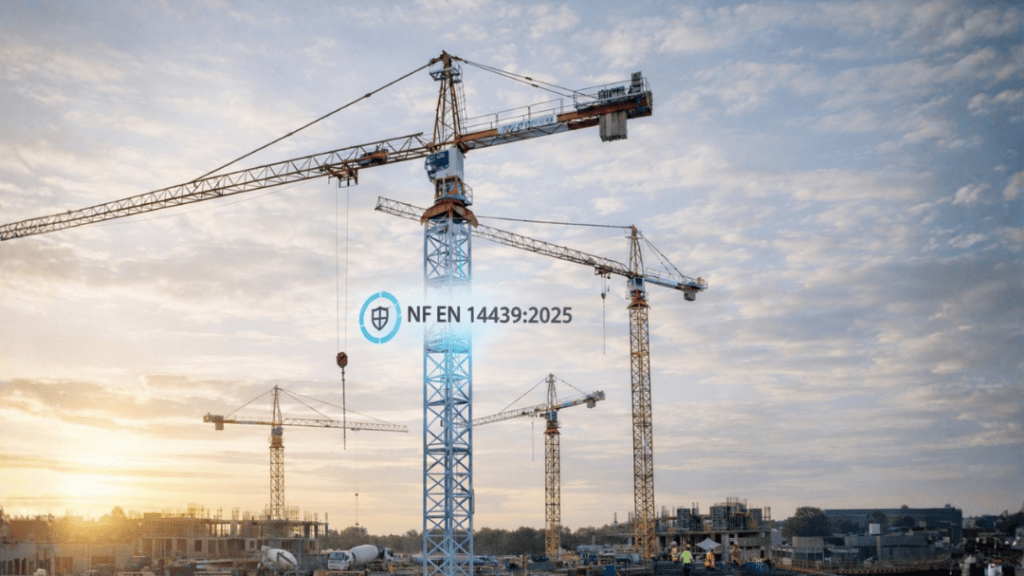
The evolution of standard NF EN 14439:2025
The construction and lifting sector is undergoing a profound transformation driven by new safety requirements and the digitization of construction equipment. The publication of standard NF EN 14439:2025 marks a decisive step for tower crane manufacturers and operators in Europe.
This major update, which replaces the 2009 version, strengthens structural safety protocols and prepares for the implementation of the future Machinery Regulation 2023/1230. In a context where safety on construction sites has become a performance indicator in its own right, this regulatory change requires a rigorous review of design, assembly, and technical supervision practices.
For construction companies, tower cranes remain the cornerstone of productivity. However, they also represent a critical risk factor. According to recent analyses of operational efficiency by industrial strategy consulting firms, mechanical failures or assembly errors can lead to extremely costly construction stoppages, sometimes resulting in tens of thousands of dollars in daily losses.
The NF EN 14439:2025 standard addresses these issues by introducing:
more refined wind resistance calculation methodologies
greater harmonization with the Eurocodes
greater consideration of aerodynamic constraints in dense urban environments
Structural safety and integration of industrial IoT in modern lifting
Motorized lifts integrated into the mast: a major development
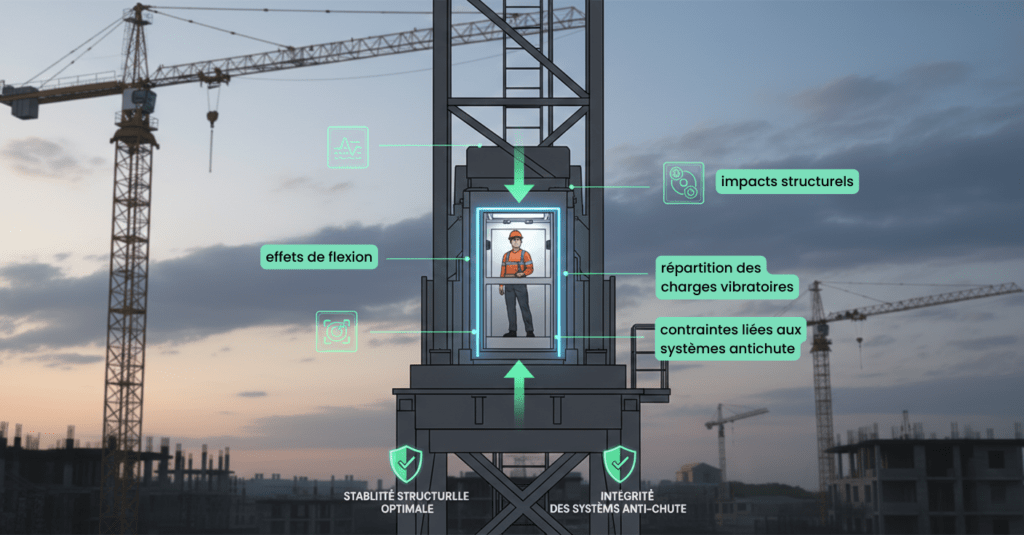
One of the major innovations of standard NF EN 14439:2025 is the inclusion of a specific normative annex concerning the installation of motorized lifts inside the mast. This measure aims to improve the occupational health of crane operators by limiting the physical effort involved in climbing.
From now on, the mast dimensions must include:
-
structural impacts
-
bending effects
-
the distribution of vibration loads
-
the constraints associated with fall arrest systems
This requirement forces engineers to rethink the internal architecture of modular cranes to ensure optimal stability while maintaining the integrity of fall arrest systems.
Electronic systems, telematics, and redundancy
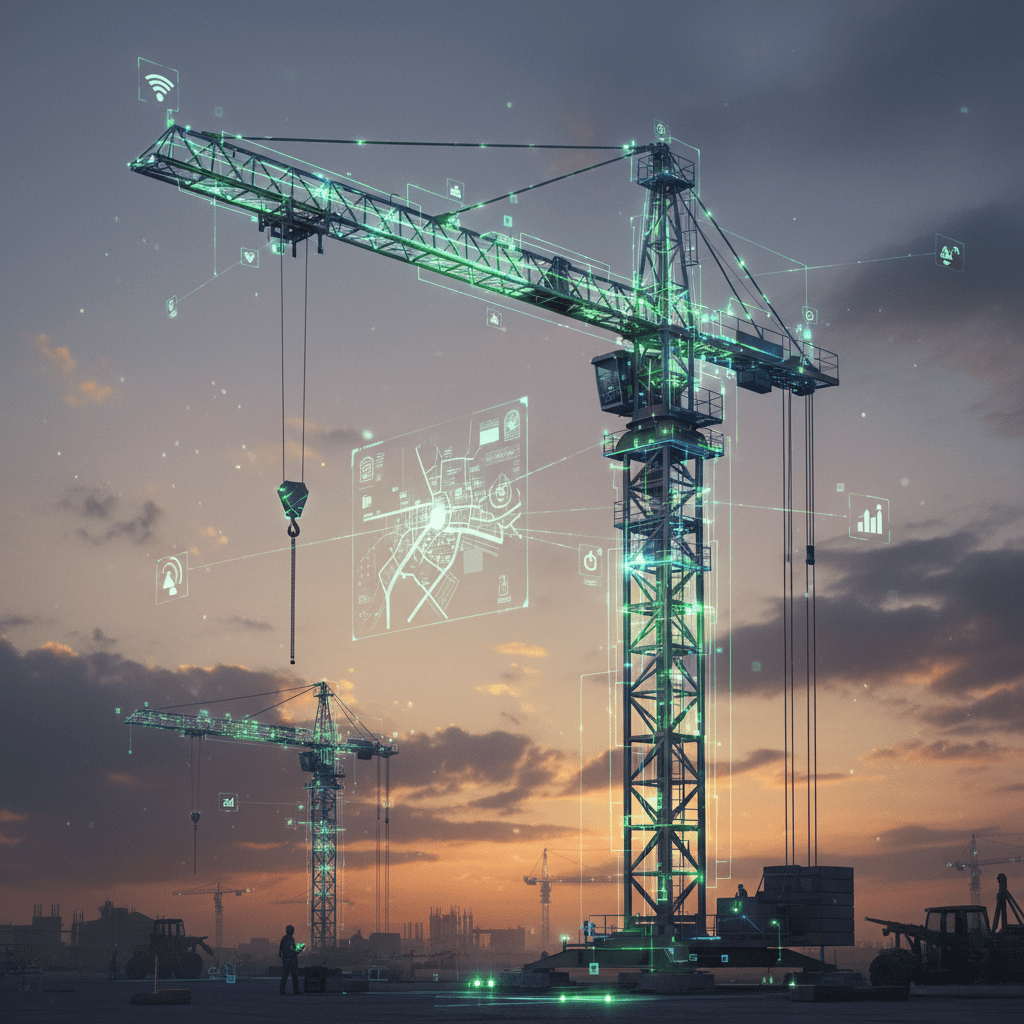
Compliance requirements now extend beyond the simple metal structure to include embedded intelligence. The NF EN 14439:2025 standard places greater emphasis on electronic safety systems and supervision telematics. Anti-collision devices and torque limiters must offer higher levels of redundancy.
To meet these challenges, adopting industrial IoT technologies is emerging as the most viable solution. The use of robust sensors and long-range trackers ensures seamless traceability of critical components. By centralizing these data flows, fleet managers can automate safety records and ensure that every element, from the chassis to the boom tip, strictly complies with the required inspection cycles.
Predictive maintenance and intelligent fleet management
Motorized lifts integrated into the mast: a major development
The impact for manufacturers is structural, requiring an update of calculation software and the validation of new type tests. For operators and lessors, the challenge is to transform this regulatory constraint into a lever for operational excellence through intelligent asset tracking.
The deployment of connected solutions using low-power networks enables accurate monitoring of operating hours and actual mechanical stress. This analytical approach facilitates compliance with new requirements on material fatigue, an area in which the 2025 version of the standard is particularly vigilant in order to prevent brittle fractures and optimize the life cycle of machines.
Beyond pure compliance, adopting these standards helps improve competitiveness in the Industry 4.0 ecosystem.
Compliance with the standard, coupled with digital supervision, enables:
-
a significant reduction in accidents
-
greater fleet availability
-
automated production of certified inspection reports
By investing in open and interoperable technology ecosystems, lifting equipment manufacturers ensure that their equipment remains compliant, available, and efficient over the long term.
Towards total supervision of construction sites thanks to geolocation and automated inventories
The future of tower cranes is intrinsically linked to their ability to become information hubs within a digitized construction supply chain. The NF EN 14439:2025 standard is not just a technical document; it is the foundation of a new era of safe construction sites where human error is reduced by data.
By combining these regulatory requirements with the power of wireless communication protocols such as Bluetooth Low Energy (BLE), companies are no longer simply complying with regulations. They are gaining complete visibility into the health of their assets.
This technological shift ensures that traceability and compliance are no longer administrative burdens, but pillars of profitability and safety in the construction and public works sector.
Pour aller plus loin, découvrez comment Charlie Solutions aide les entreprises du secteur grues à tour à structurer le suivi des composantes des grues et leurs conformités.