Whether you are a manufacturer, employer, or user of lifting equipment such as forklifts or hydraulic cranes, periodic inspections play a central role in regulating safety on construction sites.
Imposed by Europe and governed by labor laws, these procedures are essential to ensure the proper functioning of equipment and the protection of workers. In this in-depth article, we will explore the legislative aspects related to periodic inspections, the risks incurred in the event of negligence, the obligations incumbent on companies, the practical challenges of implementation, the responsibilities and penalties for non-compliance, modern tools that facilitate the management of these inspections, and the crucial connections between companies specializing in inspections and those involved in the work.

Legal basis for periodic checks
The legal obligation to carry out periodic inspections stems from the provisions of the Labor Code. This stipulates that hydraulic lifting equipment must be inspected every six months, while electrical equipment and fixed lifting equipment must be inspected annually. These regulations aim to ensure worker safety, preserve equipment, and prevent incidents on construction sites.
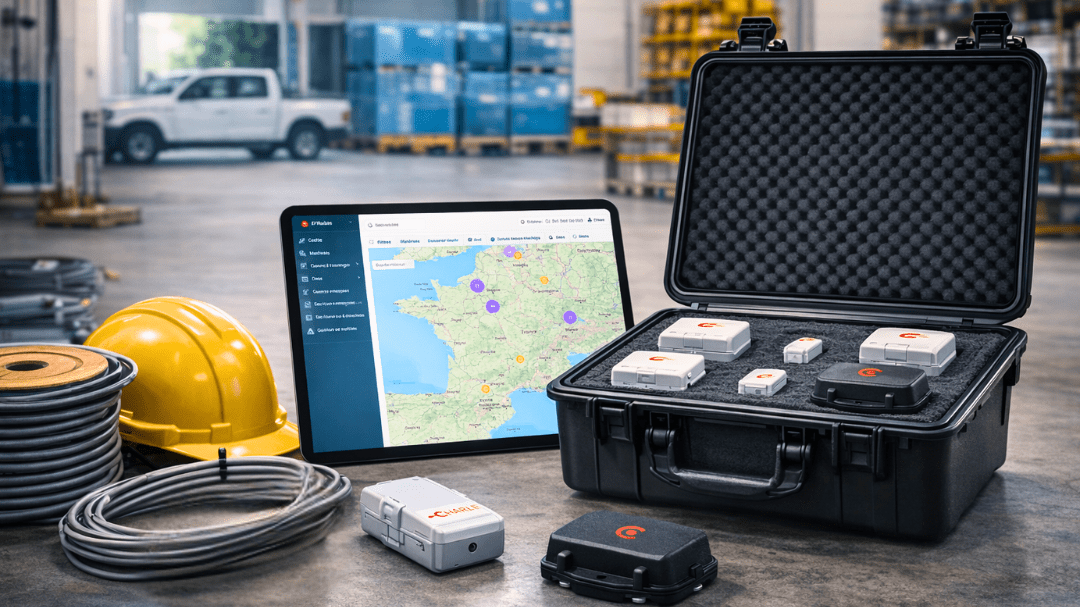
Pour simplifier ces obligations, Charlie Solutions centralise le suivi de conformité du matériel, les dates de contrôle et les rappels de maintenance dans une seule plateforme. Découvrez comment nos outils Charlie vous permettent d’assurer la conformité de votre parc matériel.
Risks inherent in neglecting audits
Neglecting periodic inspections exposes workers to considerable risks. Faulty equipment can cause major accidents, endangering the lives of people on the construction site. Companies therefore have a threefold responsibility: to guarantee the safety of their employees, to ensure that their equipment is in good condition, and to comply with the law.
Companies' obligations regarding periodic audits
Beyond simple regulatory compliance, companies have specific obligations related to periodic audits. Accessibility to audit documents in the field is crucial. Companies must be able to prove the traceability of maintenance operations as required by ISO9001, and each piece of equipment must be associated with a unique identifier to ensure accurate tracking. This documentation provides a solid basis for preventive maintenance planning, continuous process improvement, and facilitates compliance to obtain AFNOR and MASE certifications. All of this is a solid way to meet legal requirements.

Practical challenges of document accessibility
Making the necessary documents available to all users is one of the major challenges in managing periodic audits. Companies often use online platforms such as drives to store and share these documents. However, the transition to digital is not always smooth, and problems can arise, particularly in terms of user training, data security, and system compatibility. Some stakeholders still prefer paper or spreadsheet documentation, which can complicate the coordination of information in the field.
Practical challenges of material recovery
Effective equipment location is another sticking point in managing periodic inspections. Companies face logistical challenges due to large and dynamic construction sites, frequent rotation of equipment from one site to another, the diversity of locations, and often tight time constraints. Finding specific equipment quickly can be complex and can be solved by adopting modern equipment tracking and location solutions. Technologies such as geolocation systems, RFID chips, and mobile applications offer effective ways to track and quickly locate equipment. This approach not only helps optimize equipment utilization, but also reduces search times, facilitating equipment maintenance and improving overall productivity on construction sites.
Responsibilities and penalties for non-compliance
The crucial question is who risks what in the event of non-compliance with periodic verification obligations. Fines and criminal penalties may be imposed on companies that fail to comply with these obligations and may vary depending on the nature of the non-compliance, ranging from financial penalties to prison sentences for the most serious cases. Since Law No. 2021-1018, companies that fail to comply with their material compliance obligations risk a €10,000 fine as a criminal penalty, which can rise to €100,000 in the event of a repeat offense. In addition, administrative penalties may be imposed in the event of non-compliance.
Responsibility lies with both employers and maintenance managers, highlighting the need for close cooperation between different hierarchical levels within the company and providers of periodic general inspections (PGIs).
Reminder and anticipation tool for effective audit management
Given the complexity of regulations and to ensure effective management of periodic inspections, modern tools have emerged to facilitate the process. These tools include automated tracking and reminder systems, which help teams anticipate inspections and proactively plan maintenance operations. These tools contribute to incident prevention, reduce emergency repair costs, and optimize equipment operational availability.
Toward a culture of safety and compliance
Periodic inspections cannot be considered a mere administrative formality. They are an essential pillar of the smooth running of construction sites. A thorough understanding of what periodic inspection entails is crucial. An integrated approach, going beyond simple compliance, helps to establish a culture of safety and compliance, ensuring safe construction sites that comply with current standards and reducing injuries and lost time.
If you want to locate your equipment, improve your equipment maintenance tracking, set up alerts, centralize your regulatory documents, and make them easily available from your job sites, we can discuss your needs together.